Ozempic Costs $969 in America and $59 in Germany. The Senate Asked Why.
Same drug. Same company. One country pays nine times more.
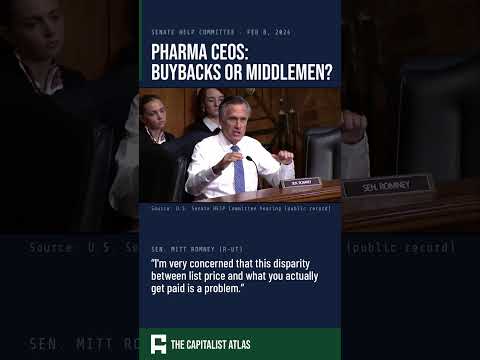
On September 24, 2024, Novo Nordisk CEO Lars Fruergaard Jørgensen testified before the Senate HELP Committee. The central question was simple: why does Ozempic cost Americans so much more than everyone else?
The numbers
- Ozempic list price, U.S.: about $969 per month
- Ozempic, Germany: about $59 per month
- Best-case U.S. net price (after rebates and discounts, per the committee): still nearly $600, over nine times the German price
Ozempic and its sister drug Wegovy turned Novo Nordisk into Europe’s most valuable company. These aren’t niche products. They’re among the most commercially successful drugs in the world.
The answer
Asked directly why Americans pay nine times more, the CEO didn’t defend the list price. He reframed the question:
“Today 80% of Americans with insurance have access to these medicines at $25 for a month’s supply. It is the price point at the pharmacy counter we have to talk about.”
That’s a revealing move. The $25 copay is real for many insured patients, but it works because insurers pay the rest. Insurers then recover those costs through premiums. The price doesn’t disappear; it gets redistributed.
How U.S. drug pricing actually works
There are three different “prices” for the same box of medicine:
- List price: the sticker price, like $969.
- Net price: what the manufacturer actually collects after rebates to insurers and pharmacy benefit managers.
- Out-of-pocket price: what the patient pays at the counter, like $25 with good coverage.
Each number lets a different party tell a different story. Other countries mostly negotiate one price nationally. The U.S. runs a multi-layer market, and the spread between those layers is where a lot of money is made.
What happened next
A few months after the hearing, in March 2025, Novo launched a direct cash price for Wegovy of $499 a month. That’s still far above European prices, but a clear sign there was room to move.
The Capitalist Atlas take
This isn’t a story about one villain. It’s a story about market structure. When the same product sells for 9x more across a border, the gap isn’t a cost of making the drug. It’s a function of who negotiates, who pays and who’s allowed to see the real number.
Same drug. Different border. You decide.
Go deeper
As an Amazon Associate, The Capitalist Atlas earns from qualifying purchases.
Footage: U.S. Senate HELP Committee, public record. This article is commentary and analysis, not medical or financial advice.
Source: U.S. Senate Committee on Health, Education, Labor and Pensions, hearing with Novo Nordisk CEO, Sept. 24, 2024 (public record)